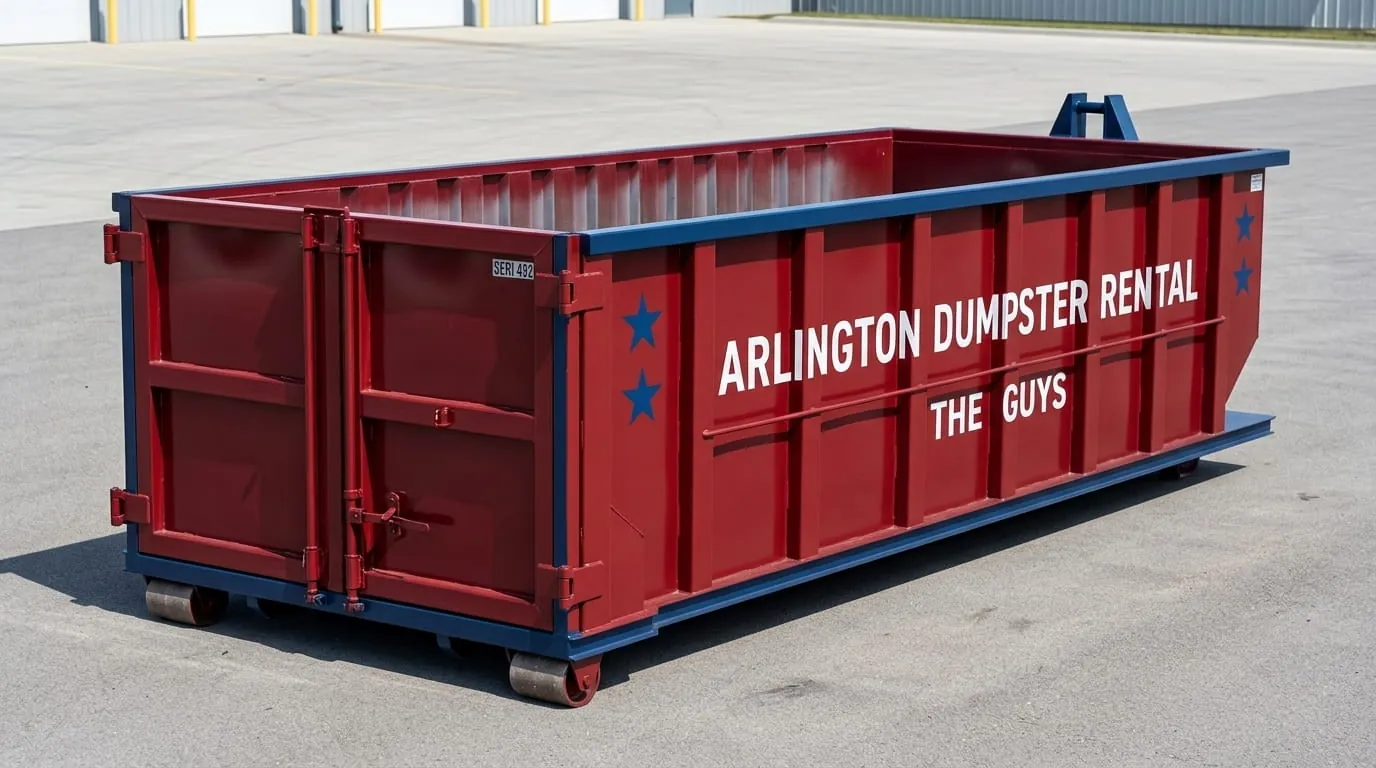
There's a moment on every remodel where the debris pile stops being background noise and starts costing you money. Maybe it's the second week of a kitchen gut in Clarendon, maybe it's when the addition framing comes down and the old sheathing goes with it. Either way, the mess is real, and how you handle it decides whether the job stays profitable or bleeds cash on hauling, fines, and lost time. I've been sizing and swapping roll-offs across Arlington and Northern Virginia long enough to know that the crews who treat debris disposal as a plan, not an afterthought, are the ones who finish clean and on budget.
This is the working guide I'd give a new contractor or a serious DIYer tearing into a project. It covers what construction and demolition (C&D) debris actually is, how to sort it, what recycles, why heavy stuff has to stay separate, and how to size and schedule a dumpster so you're never paying to move air or getting hit with overage tickets.
What Counts as C&D Debris
Construction and demolition debris is the material stream that comes off a build, remodel, or teardown. On a typical NoVA job that means wood — framing lumber, plywood, trim, old subfloor. It means drywall, both the scraps from new hangs and the busted-out sheets from a demo. Metal shows up as ductwork, copper and PVC pipe, old appliances, nails, and banding. Then there's the heavy family: concrete, brick, block, stone, asphalt, and dirt.
Roofing is its own animal — asphalt shingles are dense and get regulated differently. And then there's the stuff that does not belong in a C&D box at all: paint, solvents, adhesives, asbestos, treated wood in some cases, and anything with a battery or a refrigerant charge. Mix those into a debris load and you've turned a routine haul into a hazardous-waste problem. Keep them out.
Sort It at the Source, Not at the Curb
The single biggest efficiency gain on a job site is sorting as you generate. It sounds obvious and almost nobody does it well. When a demo crew throws everything into one pile, someone has to un-mix it later, or the whole load goes to landfill at the highest tip rate. Sorting at the source costs you a few labeled bins and thirty seconds of thought per toss.
Here's the practical breakdown I recommend for most remodels and additions:
- Clean wood — untreated, unpainted lumber and plywood. This is one of the most recyclable streams, often ground into mulch or biomass fuel.
- Drywall — gypsum board can be recycled into new board or used as a soil amendment, but only when it's kept clean and dry. Wet drywall turns to paste and contaminates everything around it.
- Metal — this is the one stream that can actually pay you back. Copper, aluminum, and steel have scrap value. Pull the metal and it either offsets your disposal cost or goes free.
- Concrete, brick, and masonry — heavy, and almost always recyclable as crushed aggregate. This never belongs mixed with light debris.
- Cardboard and clean packaging — new fixtures and materials arrive wrapped in it. Flatten and recycle separately.
- General trash — the contaminated, the mixed, the unsalvageable. Whatever's left.
You don't need six dumpsters to do this. You need staging — a few bins or marked areas — and one or two roll-offs sized for the streams that dominate your load. The sorting happens on the ground; the dumpster is just where the sorted material lands.
What Actually Recycles in Northern Virginia
People assume "recyclable" is a fixed property. It isn't — it depends on whether the material is clean and whether there's a facility that takes it. In our area, the strong recyclers are metal (always), clean concrete and masonry, clean wood, and cardboard. Drywall recycles when it's dry and separated. Asphalt shingles recycle at specialized facilities and get folded back into pavement.
The killer is contamination. A concrete load with rebar sticking out, wood mixed with drywall dust, a metal pile that's half insulation — those lose recyclability fast. Clean streams recycle; dirty streams landfill. That's the whole game. When you rent a construction dumpster rental, ask up front what the hauler diverts and how they want it separated. A good operator will tell you exactly which materials earn a lower rate when kept clean.
Why Heavy Materials Have to Stay Separate
This is where a lot of first-timers get burned. Concrete, brick, block, dirt, and asphalt are dense — a small pile weighs a shocking amount. Roll-off dumpsters are priced against a weight allowance, and heavy debris blows through that allowance long before the box looks full.
Load a 20-yard box with concrete and you'll hit a weight limit at maybe a quarter full, and the truck may not even be able to lift it safely. That's why heavy material goes in its own dedicated container — usually a smaller 10-yard box rated for the weight — and never gets mixed with light C&D. Keeping them separate isn't just about cost; it's about the physical limits of the equipment and the road-weight laws the truck has to obey.
If your job produces both — say, a basement remodel with a busted-up slab plus framing and drywall — you want two containers: a heavy box for the concrete and a bigger box for everything light. Trying to save money by combining them almost always backfires as an overweight fee. We handle this constantly; our concrete and heavy debris service exists precisely because these loads need their own equipment and their own pricing.
Sizing the Roll-Off for Your Project
Getting the size right is half art, half arithmetic. Too small and you're paying for swaps you didn't need. Too big and you're renting empty steel. Here's how the common sizes map to real NoVA jobs:
- 10-yard — small bathroom demo, a single room, and the go-to for heavy debris like concrete and tile because of the weight limits. Fits in a tight Arlington driveway.
- 20-yard — the workhorse for kitchen remodels, a couple of rooms of flooring, mid-size cleanouts. If you're not sure, this is usually the safe call.
- 30-yard — larger additions, whole-floor gut jobs, new construction framing waste. Lots of bulky, light material.
- 40-yard — major demolition, commercial work, big-volume light debris. You need the room and the site to stage it.
The trick most people miss: volume and weight are two different constraints. A 30-yard box full of fluffy framing scraps might weigh less than a 10-yard box a third full of concrete. Size for whichever limit you'll hit first. For remodels, that's usually volume. For any demo involving masonry or tile, it's weight, every time.
When you're mid-project and the box is filling faster than expected, don't cram. Overloading past the fill line means the driver legally can't haul it, and you'll wait for a re-load or eat a fee.
Not sure which size fits your job? Call Arlington Dumpster Rental Guys at (571) 583-6105 and we'll size it with you over the phone — it takes two minutes and saves you a swap.
Scheduling and Swaps for Working Crews
On a live job site, the dumpster is part of the schedule, not separate from it. The best crews time delivery to the phase of work. You don't want a roll-off sitting full for a week during a permitting delay, and you don't want demo day to arrive with no box on site.
For a phased remodel, plan your swaps around the debris peaks. Demolition is the big one — that's when you generate the most, fastest. Framing and rough-in produce a steady trickle. Finish work is light. If you're running a multi-week addition, a swap-out (haul the full box, drop an empty in the same spot) at the end of demo keeps you from renting oversized steel for the whole job.
A few scheduling habits that save real money and headaches:
- Book delivery for the day before demo starts, not the morning of — traffic and access in dense Arlington neighborhoods can push a same-day drop.
- Give your hauler a clear, legal placement spot: driveway if possible, and if it's the street, know your permit rules.
- Call for a swap when the box hits about three-quarters, not when it's overflowing. That buffer keeps your crew working while the truck's en route.
- Consolidate swaps to phase transitions so you're not paying trip fees for half-empty hauls.
Keeping Dense NoVA Job Sites Clean and Compliant
Arlington and inner Northern Virginia are tight. Small lots, close neighbors, street parking that's already a fight, and HOAs and county rules that notice when a job site spills over. A clean site isn't just professional courtesy — it's how you stay out of trouble.
Placement matters. A roll-off on a public street usually needs a permit, and blocking a sidewalk or a neighbor's access gets complaints and stop-work attention fast. Keep debris inside the container, not stacked around it — wind scatters loose drywall dust and packaging, and that's the kind of thing that draws a call to the county. Cover heavy or dusty loads when they're not being actively filled.
Compliance also means keeping the banned materials out of the box. Paint, chemicals, tires, electronics, and appliances with refrigerant have their own disposal paths and can't ride along in a C&D load. Landfills reject contaminated loads, and a rejected load comes back to you — literally, sometimes, with a fee attached.
The crews that keep their sites tight in this area all do the same handful of things: they sort as they go, they size their boxes honestly, they swap on schedule, and they keep the banned stuff out. None of it is complicated. It just takes a plan and a hauler who knows the local rules.
The Bottom Line
Disposing of construction debris the right way comes down to sorting at the source, keeping heavy material separate from light, sizing your roll-off for the constraint you'll actually hit, and timing your swaps to the work. Do that and you divert more to recycling, pay less in tipping and overage fees, and keep your site clean enough that nobody from the county ever needs to visit.
If you've got a remodel, an addition, or a demo coming up in Arlington or anywhere in Northern Virginia, we can help you plan the debris side before the first wall comes down. Get in touch or call (571) 583-6105 and we'll get you the right box, on the right day, at the right price.
Founder, Arlington Dumpster Rental Guys — sharing straight advice from more than 15 years of local hauling experience.