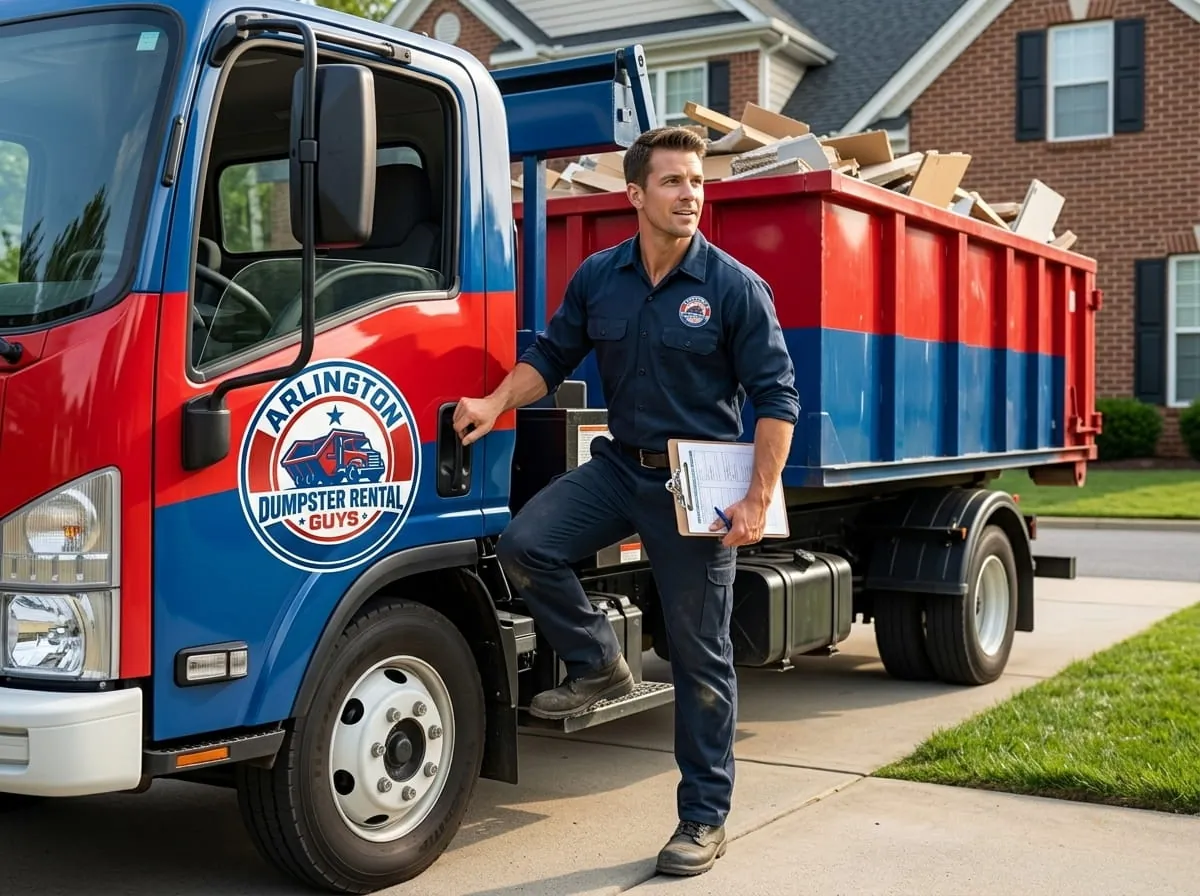
I have been dropping roll-off boxes around Arlington and the rest of Northern Virginia long enough to watch a lot of good material get thrown away that never had to be. A kitchen tear-out, a garage cleanout, a small commercial reno. People assume the whole container is landfill-bound. It usually is not. A surprising share of what goes into a dumpster on a typical Arlington job gets pulled back out, sorted, and sent somewhere useful. This article walks through how that actually happens, what counts as recyclable, and how you can plan a project so less of it becomes trash in the first place.
One note up front. Rules change, facilities change their acceptance lists, and Arlington County updates its programs. Treat everything here as the working knowledge of a local hauler, not gospel. For anything that affects a permit, a fee, or a hard deadline, confirm the current specifics with Arlington County directly.
What actually happens to a full roll-off
Here is the part most homeowners never see. When a loaded container leaves your driveway, it rarely goes straight to a hole in the ground. Mixed construction and demolition debris — what the industry calls C&D — typically gets tipped at a transfer station or a material recovery facility first. There, the load is spread out and sorted, sometimes by machine, sometimes by hand, often both. Metal gets pulled. Cardboard comes off. Clean wood is separated. Concrete and masonry get their own pile. What remains after the valuable and reusable fractions are removed is what heads to disposal.
The economics drive this more than any green mission statement. Metal has scrap value. Concrete can be crushed and reused. Landfill tipping fees are charged by weight, so pulling heavy inert material out of a load before it hits the scale saves real money. That alignment between profit and diversion is why sorting happens whether or not anybody in the chain cares about the environment. It is also why a well-run hauler can genuinely tell you a big fraction of your debris avoided the landfill.
The diversion rate you get depends heavily on how the container was loaded. A box packed with cleanly separated material sorts fast and diverts well. A box where drywall, food waste, insulation, and dirt got mixed into everything is harder and more expensive to process, so more of it ends up as residual trash. That is where you have leverage, and I will come back to it.
The four materials worth separating
On the projects we handle, four categories carry almost all of the recycling value. If you understand these, you understand most of what matters.
Metal
Metal is the easy one. Old appliances, ductwork, copper pipe and wiring, steel studs, cast-iron radiators, aluminum gutters, rebar, HVAC condensers. Almost all of it has a buyer. Ferrous and non-ferrous metals both get recovered, and the non-ferrous stuff — copper, brass, aluminum — is valuable enough that it is worth setting aside on its own. If you are gutting a house and you have any real quantity of copper or brass, tell your hauler before it disappears into the mixed pile. Sometimes it is worth a separate arrangement.
Cardboard
Cardboard piles up faster than anyone expects, especially on a job that involves new appliances, cabinets, flooring, or fixtures. Broken down flat and kept dry, old corrugated cardboard is one of the cleanest, most reliably recycled materials there is. Wet, greasy, or heavily contaminated cardboard is a different story and often cannot be recycled, so keep it out of the rain and off the muddy ground if you want it to count.
Clean wood
Clean, untreated dimensional lumber — framing scraps, pallets, uncoated boards — can be ground into mulch, chips, or biomass feedstock. The word that matters is clean. Pressure-treated lumber, painted or stained wood, plywood and OSB with a lot of glue, and anything with hardware still in it usually does not qualify as clean wood and gets handled differently. If you are doing a framing job and generating a lot of cutoffs, keeping them in their own pile makes them far more likely to be diverted.
Concrete, brick, and masonry
Concrete is heavy, which makes it expensive to landfill and valuable to divert. Broken slab, sidewalk, foundation, brick, block, and clean masonry can be crushed and reused as aggregate or road base. Because it is so heavy, a load of clean concrete is often best kept by itself. Many haulers, us included, will talk to you about a dedicated container for a concrete-heavy job, because mixing it with light debris messes up both the weight math and the sorting.
If you are not sure which bucket a given material falls into, ask. A two-minute phone call before you start loading beats guessing. Reach us at our contact page and we will tell you straight whether something is worth separating for your particular job.
Arlington County and the regional picture
Arlington runs its own solid waste and recycling programs for residents, and the County has long pushed household recycling, yard waste collection, and diversion of materials that do not belong in the regular trash stream. Northern Virginia as a region is served by a network of transfer stations, material recovery facilities, and waste-to-energy and landfill infrastructure that the local jurisdictions share and coordinate around. I am deliberately keeping this general, because the exact facilities, hours, acceptance lists, and fees shift over time and vary by whether you are a resident, a contractor, or a commercial account.
What you should take from this is the shape of it, not the fine print. Curbside residential recycling and a roll-off dumpster on a renovation are two different systems. Household recycling covers your bottles, cans, paper, and cardboard through County collection. A roll-off is a private commercial arrangement, and the debris in it flows through commercial C&D channels. Certain materials — electronics, appliances with refrigerant, paint, chemicals, tires, and other household hazardous waste — are handled through their own dedicated programs and generally should not go in a construction dumpster at all. Arlington County publishes where those special-handling items are supposed to go, and that is exactly the kind of detail worth confirming with the County before you assume.
Keep the poison out of the box
This deserves its own section because it trips people up constantly. A roll-off is for construction debris and bulky junk. It is not a catch-all for everything you want gone. The items that cause problems — and that a reputable hauler will not knowingly take in a standard container — include paint and solvents, motor oil and other automotive fluids, propane tanks and other pressurized cylinders, tires, batteries, asbestos-containing material, and most electronics.
Two reasons to care. First, a single leaking can of chemicals can contaminate an entire load and turn material that would have been recycled into hazardous waste, which is worse for everyone and can cost you in fees. Second, some of these items are flatly prohibited from disposal facilities, so they get rejected, and then it becomes your problem again. When in doubt, set it aside and ask. Many of these materials have free or low-cost proper disposal routes through County or regional programs — you just have to use them instead of the dumpster.
Making less waste in the first place
The cheapest debris is the debris you never generate. A few habits that genuinely move the needle on a project:
- Deconstruct instead of demolish where it pays. Pulling cabinets, doors, trim, and fixtures out intact takes longer than swinging a sledgehammer, but it keeps material out of the box and can create donatable items with real value.
- Order tighter. A lot of construction waste is over-ordered material and offcuts. Measuring carefully and buying closer to what you need cuts the pile before it starts.
- Separate as you go. Set up a spot for metal, a spot for cardboard, a spot for clean wood. Sorting at the source is ten times easier than sorting a compacted container after the fact, and it directly raises how much gets diverted.
- Right-size the container. Ordering a box that fits the job keeps you from paying to haul air, and it discourages the temptation to fill empty space with random household junk that muddies the load.
If part of your job is really a cleanout rather than a demolition — a basement full of old furniture, a garage of accumulated stuff — that is often better handled as junk removal than by filling a construction dumpster, because usable items can be routed to donation or reuse instead of buried under drywall.
Somewhere in the middle of planning a project is the right time to call and talk it through. If you tell us what you are tearing out, we can point you toward the setup that diverts the most and costs you the least. Reach a real local person at (571) 583-6105 — a five-minute conversation before the dumpster shows up saves money and headaches after.
Donate what still has life in it
Before something goes in any container, ask whether somebody could use it. Northern Virginia has a strong network of building-material reuse outlets and charitable resale operations that take usable cabinets, doors, appliances in working order, fixtures, lumber, and hardware. A cabinet set that is five years old and perfectly functional does not belong in a landfill because you wanted a new color. Reuse organizations will often take that, and depending on your situation there may be a tax deduction in it for you as well.
The same goes for the softer stuff on a cleanout — furniture, tools, household goods. Working items in decent shape are donation candidates. This is not just feel-good advice. Every item that gets donated is an item you do not pay to haul and dispose of, so it lines up with your budget as neatly as it lines up with keeping usable goods in circulation.
How we approach it
We are a local operation, and we treat diversion as part of doing the job right rather than a marketing sticker. That means being honest about what can and cannot be recycled from your particular load, steering the wrong materials to the right programs, and helping you load in a way that keeps as much out of the landfill as the job realistically allows. If you want to know more about who we are and how we work across Arlington and the DC metro, have a look at our about page.
Responsible disposal is not complicated, but it is not automatic either. It comes down to a handful of decisions made before and during the job: separate the metal, cardboard, clean wood, and concrete; keep hazardous material out of the box entirely; make less waste where you can; and donate what still works. Do those four things and the amount of genuinely landfill-bound material shrinks a lot. And for the details that carry a fee or a rule attached to them, always confirm the current specifics with Arlington County.
Founder, Arlington Dumpster Rental Guys — sharing straight advice from more than 15 years of local hauling experience.