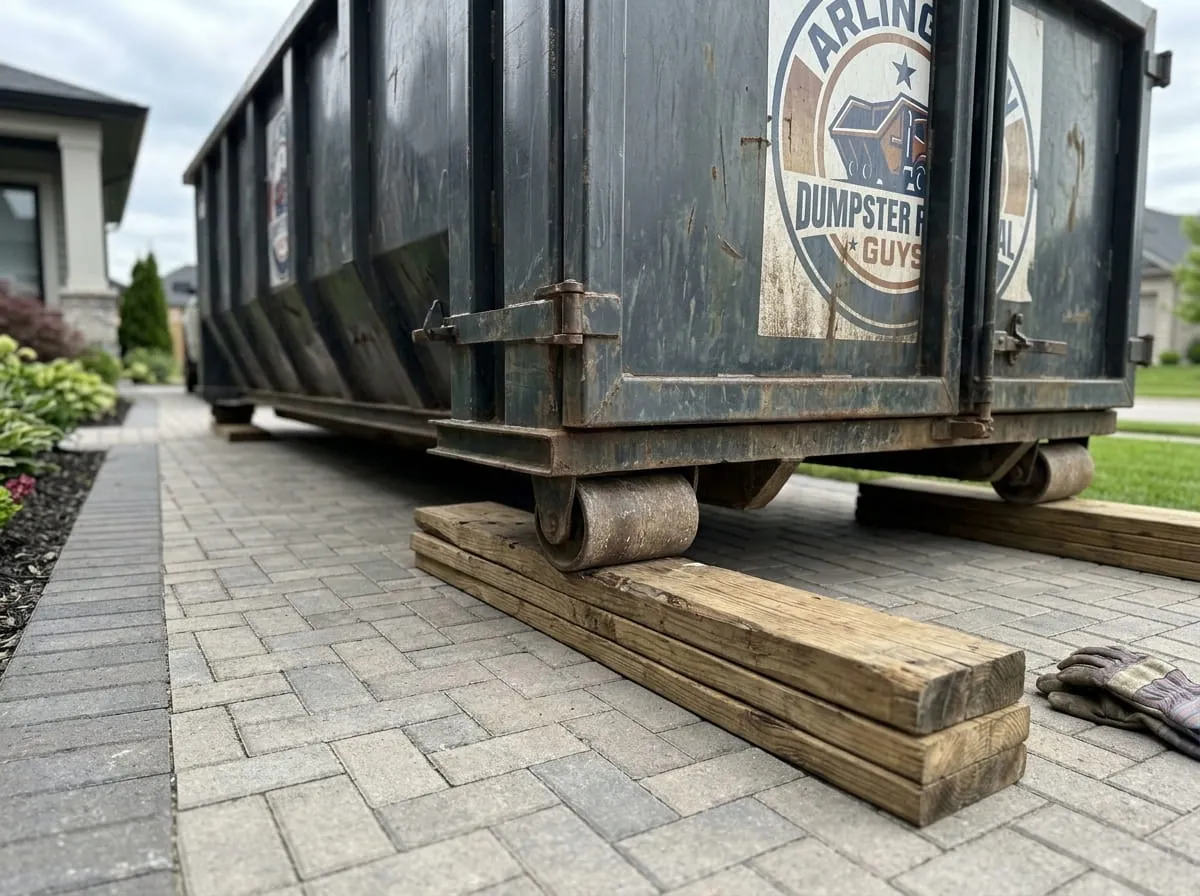
I've hauled off enough estate cleanouts, downsizing jobs, and "we finally bought a bigger place" moves around Arlington to know one thing for certain: the people who finish a cleanout without losing their minds are the ones who work in order. They don't wander the house grabbing whatever catches their eye. They pick a room, empty it, sort it, and move on. That's the whole trick, and this guide walks you through it the way I'd explain it standing in your driveway.
Before you touch a single box, understand the shape of the job. A full-house cleanout is not a weekend of light tidying. It's a physical, decision-heavy project, and the two things that derail it are indecision and running out of somewhere to put the trash. We'll handle both.
Start with a plan, not a room
Walk the whole house first with a notepad or your phone. You're not sorting yet, just scouting. Note which rooms are packed to the ceiling and which are nearly empty. The garage, attic, and basement are almost always the heavy hitters, so they'll drive your dumpster size and your schedule. A finished basement full of old furniture is a different animal than a crawlspace with a few boxes.
Set up a staging system before you begin. I use three zones, physically separated so nothing gets mixed up: Keep, Donate/Sell, and Toss. Garbage bags for soft trash, and a clear path from every room to the dumpster. If your keep pile and your toss pile touch, something good ends up in the landfill and something junky ends up back in the closet. Keep them apart.
Work the sequence: worst rooms first
Counterintuitive, but tackle the hardest, heaviest spaces while your energy and daylight are high. Here's the order I'd run a typical Northern Virginia house.
1. The garage
Garages collect everything the house didn't want: paint cans, busted tools, bikes with flat tires, boxes that moved with you two houses ago and never got opened. Pull everything into the driveway if weather allows. It's brutal but it forces decisions, because you have to put every item somewhere before dark.
Watch for hazardous stuff here. Old paint, motor oil, pesticides, propane tanks, and car batteries do not go in a dumpster and can't ride to the landfill. Arlington County runs a household hazardous materials drop-off, and most NoVA jurisdictions have similar programs. Set those items aside in their own corner. For the rest, be honest about the "I might fix it someday" pile. You won't. Toss it.
2. The basement
Basements are where furniture goes to die. Old couches, exercise equipment, water-damaged boxes, that entertainment center from 2004. This is your bulkiest waste. If it's soft, moldy, or smells like a basement, it's a toss. If a mattress or upholstered piece got wet down here, nobody wants it donated, so don't feel guilty.
Break down large furniture as you go rather than stacking it whole. A dresser with the drawers pulled and the frame flattened takes a fraction of the dumpster space. This is where a decent number of homeowners underestimate volume, so measure your dumpster fills honestly as you load.
3. The attic
Attics are lighter but awkward. Holiday decorations, old luggage, insulation scraps, boxes of paperwork. The heat makes it miserable, so go early morning. Bring the boxes down to a sorting area with real light instead of deciding in a dim, hot crawlspace. Shred or securely dispose of old documents, and be careful with anything that's been up there long enough to grow mold.
4. The kitchen
Kitchens are dense but manageable. Expired pantry goods, chipped dishes, duplicate gadgets, the drawer of lids with no containers. Unopened, unexpired non-perishables can go to a food bank rather than the trash. Small appliances that still work are easy donations. Broken ones are toss. Clear the cabinets top to bottom, one at a time, so you never lose your place.
5. The bedrooms and closets
Save these for when you're warmed up and ruthless. Clothing, shoes, linens, and the closet archaeology of a decade. The rule that saves the most time: if you haven't worn it or used it in a year and it's not seasonal or sentimental, it goes to the donate pile. Bag clothing by category as you pull it so drop-off later takes ten minutes instead of an afternoon.
Sorting: keep, donate, toss
The decisions are the hard part, not the lifting. A few field rules that keep things moving:
- Handle each item once. Pick it up, decide, place it in a zone. Don't set it back down "to think about it."
- Keep means it has a home. If you can't name where it'll live, it's not a keep.
- Donate means genuinely usable. Stained, broken, or missing-parts items aren't donations, they're toss. Charities pay to dispose of what they can't sell.
- When in doubt, toss. The maybe pile is where cleanouts go to stall.
If you'd rather not touch the heavy toss pile at all, that's exactly what a full-service junk removal crew is for. Some folks sort the keep and donate items themselves and let us carry out everything headed for the dumpster. Either way works.
Picking the right dumpster size
This is the question I get most, and getting it wrong costs you either money or a second haul. Rough guide for a full cleanout:
- 10-yard: a single packed room, a small condo, or a garage-only job.
- 15-yard: a couple of rooms plus a garage, or a small townhome.
- 20-yard: the workhorse for a whole-house cleanout on an average NoVA home. Handles furniture, boxes, and general debris from several rooms without towering over your driveway.
- 30-yard: large homes, heavy furniture volume, or a multi-generation estate cleanout.
For most full-house jobs in Arlington and the surrounding area, the 20-yard dumpster is the sweet spot. It gives you room to be decisive without paying for capacity you won't use. When you're genuinely torn between two sizes, go up one. A half-empty larger container costs far less than renting a second one because you underestimated the basement.
Not sure which size fits your job? Call us at (571) 583-6105 and describe the house room by room. We size these every day and we'll steer you honestly, even if that means the smaller can.
Where to donate around Northern Virginia
Getting good stuff out of the waste stream is worth the small extra effort, and NoVA has plenty of options:
- Habitat for Humanity ReStore (Alexandria and Fairfax area) takes furniture, appliances, cabinets, and building materials, and many will schedule pickups for larger loads.
- Goodwill and Salvation Army locations across Arlington, Alexandria, and Fairfax handle clothing, housewares, and small furniture.
- A-SPAN / local shelters often need coats, blankets, and household basics.
- Food banks like the Arlington Food Assistance Center take unexpired, unopened pantry goods.
Call ahead on furniture. Donation centers have gotten picky about upholstered items and won't take anything with damage or odors. If a piece won't pass their inspection, don't waste a trip; it goes in the dumpster.
Condo and townhome cleanouts
These come with a wrinkle: space and rules. You often can't just drop a container wherever you like. A few things to sort out before your rental date:
- Check with your HOA or building. Many condos require permission for a dumpster and may restrict placement and duration. Ask early.
- Placement matters. On a tight townhome driveway, a 10 or 15-yard can sits neatly where a 20 would block the street. We can advise on footprint before we deliver.
- Permits. If the only spot is the street, some NoVA municipalities require a right-of-way permit. Better to know before delivery day than after a ticket.
- Stairs and elevators. Upper-floor units mean more carry time. Budget extra hours, or bring in help for the haul-down.
For tight urban jobs where a container genuinely won't fit, junk removal by the truckload is sometimes the smarter play. We'll tell you straight which approach suits your situation.
The finish line
Once the rooms are empty, do a final walk with fresh eyes. Check behind doors, the top shelves, the back of the crawlspace. Load your dumpster evenly and keep it under the fill line, because an overloaded container can't legally be hauled and you'll be redistributing debris in your driveway.
A whole-house cleanout is a real project, but it's a finite one. Work the sequence, keep your three piles honest, and get the right container the first time. When you're ready to line up a dumpster or want a second opinion on sizing, reach out or call (571) 583-6105. We know these neighborhoods, we know the county rules, and we'll get you a container that fits the job and the driveway.
Founder, Arlington Dumpster Rental Guys — sharing straight advice from more than 15 years of local hauling experience.