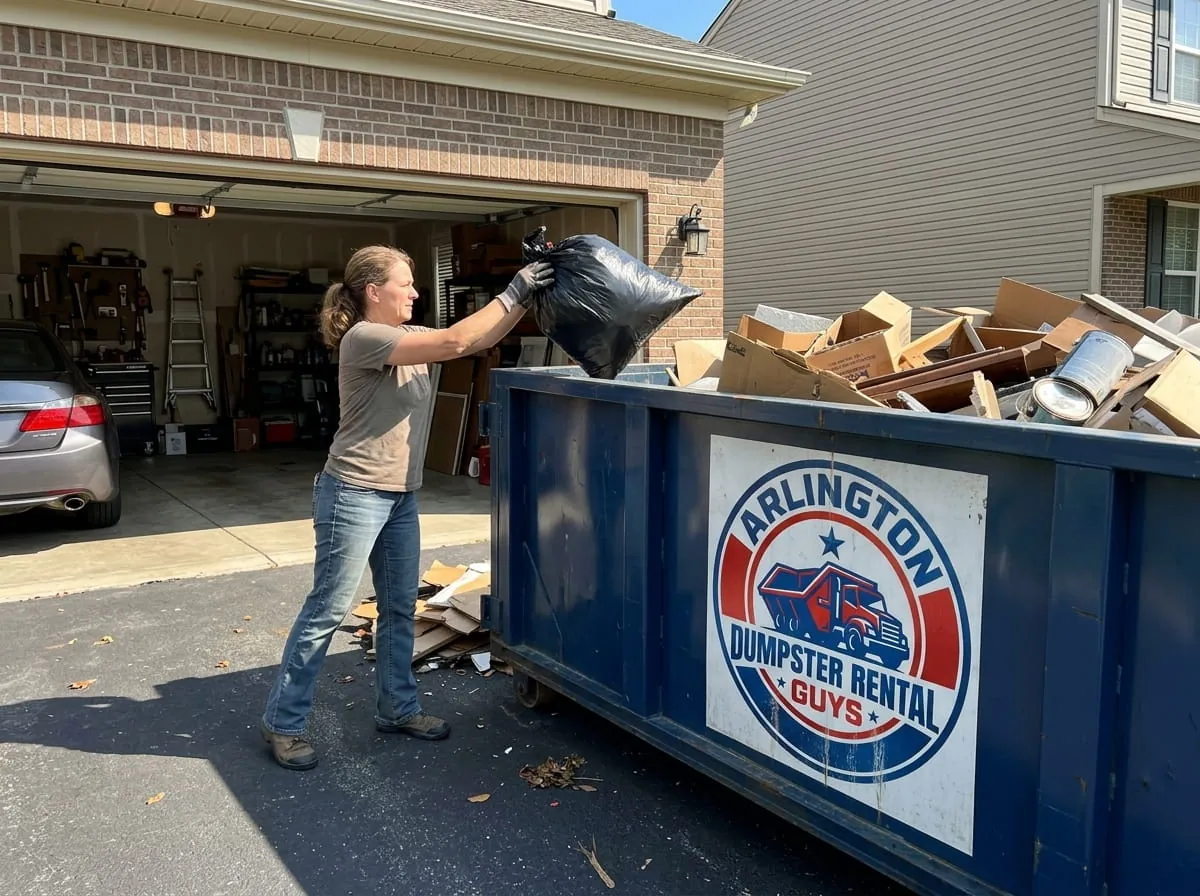
Every week somebody calls me and opens with the same line: "I have no idea what size I need." That's fine. Most people rent a dumpster once every few years, usually in the middle of a stressful project, and the last thing they want is a math problem. So let me walk you through how I'd size it if you handed me the keys to your project and said, "Just tell me what to get."
I've dropped bins in half the driveways in Arlington, plus Alexandria, Falls Church, McLean, and out toward Fairfax. The size question almost always comes down to three things: how much stuff, how heavy that stuff is, and where the bin can physically sit. Get those three right and everything else follows.
Dumpster Sizes in Plain English
Dumpsters are measured in cubic yards, which is the volume they hold, not the weight. A "yard" here is a cubic yard: roughly the size of a standard washing machine. When someone says "20 yard," they mean the box holds about 20 of those. That's the number on the paperwork. What it doesn't tell you is how heavy your load can be, and that trips people up constantly. More on weight in a minute.
Here in Northern Virginia the four sizes that cover 95% of jobs are the 10, 15, 20, and 30 yard. Here's how I think about each one.
10 Yard: The Small, Heavy-Job Bin
A 10 yard is short and low to the ground. Picture a box about 12 to 14 feet long, 8 feet wide, and only about 3.5 feet tall. That low wall matters more than the volume, because it means you can walk right up and drop things in without a ramp or a heave over your head.
This is my go-to for dense, heavy material. Think one bathroom gut, a small kitchen tear-out, a single room of flooring, or a concrete patio and old brick. It holds roughly 3 to 4 pickup truck loads. In condo and townhome country, this is often the right call because the material is heavy and the space to park is tight.
- One bathroom remodel (tile, tub, vanity, drywall)
- Up to about 400 square feet of tile or hardwood removal
- Concrete, dirt, brick, roofing shingles (heavy stuff)
- A serious garage or basement declutter in a smaller home
If your project is mostly rubble, do not size up thinking bigger is safer. A 10 yard packed with concrete can already push against the weight limit. Filling a bigger box with the same material just gets you an overage fee. If you want the full breakdown on this one, we keep a detailed 10-yard dumpster page with dimensions and typical loads.
15 Yard: The Tweener That Solves a Lot of Problems
The 15 yard is the size people forget exists, and it's often the smartest pick. It gives you noticeably more room than a 10 without the height and length of a 20. Walls are still manageable. It fits in a standard driveway without eating the whole thing.
I reach for the 15 on medium cleanouts and mixed-material remodels: a kitchen plus a little flooring, a full townhome basement cleanout, a big garage plus some yard debris. It's the Goldilocks size for a lot of Arlington townhomes where the 10 feels a hair tight but a 20 is overkill.
- Full basement or attic cleanout in a townhome
- Mid-size kitchen remodel with some cabinetry
- Mixed junk: furniture, boxes, general household clutter
- Small roof, up to roughly 15 squares
20 Yard: The Workhorse
If I had to keep only one size in the yard, it'd be the 20. It's the size that handles the widest range of jobs without drama. The box runs about 22 feet long, 8 feet wide, and roughly 4.5 feet tall. It holds about 8 pickup loads.
This is the standard for a whole-room reno, a big house cleanout, a roof replacement, or a deck tear-off. It's bulky enough for light, voluminous debris (think old furniture, carpet, drywall, packing material) but still short enough that a decent driveway can take it. For most single-family homes in Arlington and Falls Church doing a real project, this is the answer. We break down exactly what fits on our 20-yard dumpster page.
- Whole-house cleanout (estate, moving, downsizing)
- Large kitchen or multi-room remodel
- Roof replacement up to about 25 squares
- Deck removal, flooring across a full floor
30 Yard: Big Renos and New Construction
The 30 yard is a tall box, around 6 feet high. That height is the trade-off: you get a lot of volume, but you're lifting heavier items up and over a taller wall, and it needs real space to sit. This is a whole-house gut, a large addition, new construction framing scrap, or a commercial cleanout.
Don't order a 30 for heavy debris like concrete or dirt. You'll hit the weight ceiling long before the box looks full, and you'll be paying to haul air you can't legally carry. The 30 is for bulky, lighter volume: lots of lumber, drywall, cabinetry, and general construction debris.
Volume vs. Weight: The Part Everyone Misses
Here's the thing that separates a clean rental from a surprise bill. Volume is how much fits. Weight is how much the truck can legally and safely carry. Every dumpster comes with a weight allowance, usually expressed in tons, and going over it means an overage charge per ton.
Why does this matter so much? Because material density varies wildly. A 20 yard box filled with sofas and cardboard might weigh a ton and a half. That same box filled with dirt, concrete, or wet roofing could weigh eight tons or more. The box didn't change. The load did.
Rule of thumb I give everybody: if your debris is heavy (concrete, brick, dirt, tile, roofing, plaster), size DOWN and expect the box to look half-empty when it's actually full by weight. If your debris is light and bulky (furniture, carpet, drywall, cardboard, brush), size UP because you'll run out of room long before you run out of weight.
When you're not sure how heavy your pile really is, call and describe it. That's a two-minute conversation that saves a real fee. Reach me at (571) 583-6105 and I'll tell you straight which box and which weight tier fits.
How to Avoid Over- and Under-Sizing
Under-sizing is the more common mistake, and it's the more expensive one. If you fill a bin and still have a pile left, now you're either paying for a second haul or letting junk sit in the driveway for another week. Renting one size up is almost always cheaper than renting twice.
Over-sizing wastes money in a different way: you pay for a bigger box you didn't need, and if it's heavy material, the bigger box can actually tempt you into an overage. The sweet spot is a box you fill to about 90%, level with the top rail, without going over weight.
A few honest gut-checks before you book:
- Walk the project and count rooms. One room of light debris fits a 10. Two to three rooms lean toward a 15 or 20.
- Name your heaviest material. If the word "concrete," "dirt," or "tile" comes up, think smaller box, heavier tier.
- Be honest about hidden junk. Garages and basements always hold more than you think. When in doubt, size up one.
- Think about the fill. You can't pile above the rails; that's a legal road hazard and we can't haul it. Flat-load estimates only.
Tight NoVA Driveways: Where the Bin Actually Fits
This is the part the national booking sites never mention, and it's the part that actually decides your day. Arlington driveways are short. Townhome parking is tighter. A lot of the older streets near Clarendon, Del Ray, and the Rosslyn corridor have narrow approaches and cars parked on both sides.
A delivery truck needs room to maneuver and to tilt the bed up when it sets the box down. Here's what I look for:
- Length: A 20 yard needs about 60 feet of straight clearance for delivery, roughly the length of three cars. A 10 or 15 needs less, which is why they win in tight spots.
- Width: At least 10 to 11 feet of width so the truck and box can pass.
- Overhead: No low branches or wires. The truck arm goes up high during drop-off.
- Surface: We put boards under the feet to protect your driveway. Soft asphalt in July can mark up, so this matters here.
For townhomes and condos with no usable driveway, the bin often goes on the street, and that means a right-of-way permit from the county or city. Arlington, Alexandria, and Fairfax each have their own process. I handle this all the time and can tell you whether you need one and how to get it. Don't skip it; an unpermitted bin on a public street can get tagged or ticketed.
Real NoVA Examples
Condo or Townhome Cleanout
Say you're clearing out a two-bedroom condo in Ballston after a move or an estate. The material is furniture, boxes, an old mattress, general household stuff. Light and bulky. A 15 yard usually nails it, and if driveway or street space is tight, the lower-walled 10 might be the practical pick even if it means being strategic about what goes in first. Heavy items go on the bottom, flat; furniture stacks on top.
Townhome Kitchen and Bath Remodel
A townhome owner in Shirlington gutting a kitchen and a bathroom. Cabinets, drywall, some tile, a countertop. Mixed weight. I'd put a 15 or 20 in the driveway depending on whether the flooring is coming up too. The tile and countertop add weight fast, so I'd flag the heavier weight tier up front.
Whole-House Renovation
A single-family home in Falls Church doing a full first-floor renovation: kitchen, flooring throughout, a wall coming down, a deck off the back getting torn off. That's a 30 yard, or a 20 with a planned swap-out mid-project if the driveway can't take the taller box. Lots of volume, mostly lighter construction debris, so volume is the constraint, not weight.
Roof Tear-Off
Roofing is deceptive. Shingles are heavy. A typical Arlington single-family roof might be 25 to 30 squares. That's a 20 yard on volume, but you'll want the heavier weight allowance because a full box of shingles is dense. Never a 30 for roofing alone; you'd hit weight at half-full.
Still Not Sure? Just Ask
After enough years doing this, I can size a job from a two-minute phone description better than any online calculator. Tell me the project, the heaviest thing going in, and where the bin can sit, and I'll give you the right box the first time. That's the whole goal: one delivery, one pickup, no surprise fees.
Call (571) 583-6105 or reach out through our contact page and we'll get you sorted. We serve Arlington, Alexandria, Falls Church, McLean, and the wider Northern Virginia and DC metro area.
Founder, Arlington Dumpster Rental Guys — sharing straight advice from more than 15 years of local hauling experience.